Monday, 22 August 2016

Why Intel and Microsoft Want To Make Virtual Reality Ubiquitous And Why It Matters To You


The PokemonGo phenomenon is a strange one. Whenever I see people playing the game, they appear to me like zombies: heads down, staring blankly at their handheld device, at times completely unaware of their surroundings, a slight shuffle in their gait and being led who knows where by images on a screen less real than the dream they had the night before--a strange phenomenon indeed. People claim they are getting outside more. Yes, and that's a good thing; however, one's experience is mediated through the handheld screen which undermines its reality. What would it be like to apprehend what is around without technology dreaming up all kinds of monsters lurking chimerically behind every bush? Ah but reality isn't fun without it . . . 


I've written in previous posts about virtual reality: it's use in medicine to block pain, and some of the problems with using it. Virtual Reality is going to become ubiquitous--most people who follow technological trends know this. In a recent announcement, Intel and Microsoft have partnered up to put some serious money and R&D to work to speed up this ubiquity. According to MIT Tech Review, 


"Intel and Microsoft announced Tuesday that they are working together to help computer manufacturers get into the business of making stand-alone VR headsets." 

The key here is that they will be teaming up to "help computer manufactures get into the business" of VR. Intel has developed a VR headset that is a stand-alone device that doesn't need to be tethered to a PC. And it plans to take the design specs of the headset open-source so other computer companies can create their own headsets, according to the CEO of Intel Brian Krzanich. 
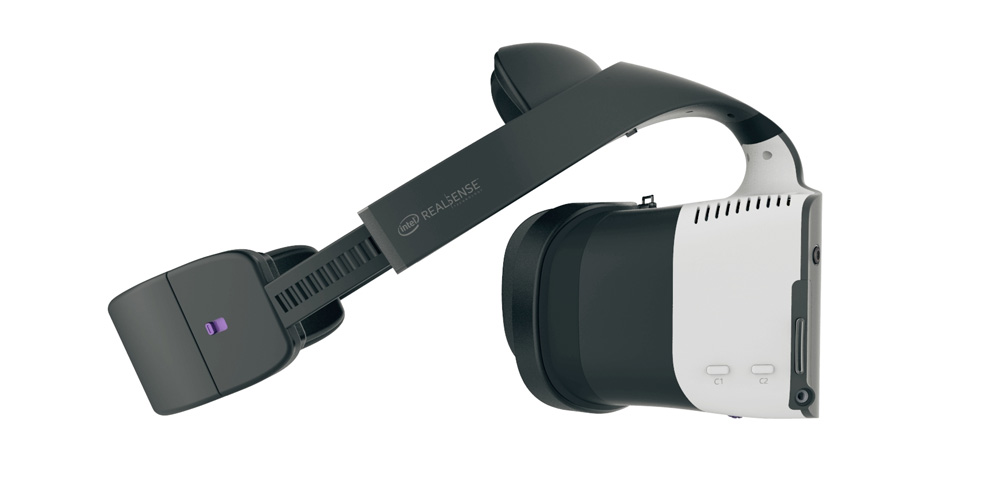

Intel's Project Alloy headset

Without a cord, and 3D mapping technology, this headset is sure to augment your experience of 'reality'. And with Intel's and Microsoft's vision for ubiquity, this new headset is just another iteration of Virtual Reality technology that is going to advance rapidly and exponentially over the coming years. 

But why does Intel want VR to be ubiquitous? What is the point of mass VR? Why is developing this technology so important beyond being able to watch movies in a more vivid way?


CNET: Intel's Project Alloy Cuts the Cord


The reason is that VR is a critical technology for futurists. According to Ray Kurzweil, with the exponential growth of nanotechnology, and its use for biological enhancement, humans will be living longer and longer each year to, eventually, living forever. The problem with this is, according to Kurzweil, boredom--there just won't be enough to do when we live forever. We just won't know what to do with eternity . . . 

So, according to him and other futurist thought-leaders, we'll need Virtual Reality to keep life exciting; for VR will allow us to do anything we dream possible--not of course with our 'real' bodies--whatever that will mean--but through augmenting our reality. Kurzweil calls this "radical life expansion," meaning expanding what you can do in life. 


Ray Kurzweil on the Next Phase of Virtual Reality


What I take from Kurzweil is that, like PokemonGo, reality isn't good enough--we need it to be somehow 'virtual', 'augmented'. Living life without the augmentation of technology would mean, using Kurzweil's logic, radical life restriction. And this further means that living life in our bodies, in our unmediated minds, is a restricted life, a "boring" life, a life of drudgery that only the creations of our hands can adequately mitigate. For Kurzweil and others, life itself isn't good enough--our experiences of it must be augmented. And if our bodies can achieve the things we dream of doing, then we'll just make our dreams reality--virtual reality. 

But this isn't all. According to Kurzweil and others, VR headsets will quickly become obsolete, replaced by a connection right into your brain through nanobots that will deliver reality directly to your neocortex. 

To get to this point, technology will have to go through iterations of development--thousands upon thousands of iterations. And therefore, to keep this utopian vision going, there need to be countless researchers and companies and money driving it. And this, I maintain, is part of Intel's larger vision and the reason why it is taking its headset open source, and, along with Microsoft, driving the next wave of VR. The hope is to rapidly advance this technology so it is ready for the emergence of immortal humanity. 

The question remains, why is reality not good enough--i.e., unmitigated, unmediated reality. Why do we seek to escape the really real of experience for the mediated-real, the 'virtually' real? It's a much broader but important question. Are we not living in a time in which more so than perhaps the last 50 years we need to be more present to what's going on around us, rather than distracted by virtual reality experiences? I've written about the use of VR to mitigate and manage pain. Think about a world in which there is upheaval--but with a great escape: VR. In the midst of trouble, of turmoil, you can block out the really-real world and live in a dream-world; a world of your fantasy--only it will seem real!







Friday, 19 August 2016

Why Uber's Disruptive Innovation Should Concern All Of Us


Uber is a contentious company--no doubt about that. A big question these days is whether as a driver one is employed by Uber. If drivers for Uber are employees, then they are entitled to all the benefits that come with being employed with a company, which, by the way, they're currently not getting. If they are self-employed drivers, then that is a totally different state of affairs. 

According to The Guardian, the lawsuit brought against Uber argues that the company has used double-speak or "forked tongues" to attract drivers and prospective ones to join the company under the guise of 'employment' with a company. Uber claims it's a "technology company," not a transportation provider; and that they attract 'partners' who have a "commonality of interest" who are seeking flexible hours. And while in a 2014 response to Transport in London (UK) Uber claimed it could  “generate tens of thousands of jobs in the UK” through job centres throughout London, what they now mean by jobs is--if you can clear your head from this obfuscation--"an ‘economic opportunity to earn money’," according to Jo Bertram the Uber's UK General Manager. 

This is the problem with disruptive innovation: not only does it disrupt conventions of practice (in this case, becoming a certified taxi driver and working for a taxi company) it also disrupts people's paradigms; and when the disruption causes people to be confused about their livelihood, what sounds like a cool disruptive idea reveals itself to be more destructive than people may have thought. 

In addition to the lawsuits brought against Uber, the tech/transport company has revealed it will be using self-driving cars in Pittsburg within weeks--a move that will reduce its drivers to rental objects. For in order for a self-driving car to be allowed on the streets it must have a human being behind the wheel. The driver doesn't have to do anything other than make sure the car stays on the road and doesn't veer into pedestrians and vehicles. Some Uber drivers are complaining the company knew this all along, while others are concerned they will be left out of a job. Up until now, Uber has been a source of income. Some Uber drivers are in between jobs, while many others are using it as their sole form of income. 

This is just the beginning of how self-driving cars are going to disrupt society as we know it. There are so many jobs currently wrapped up in the transportation industry. A tech company comes along, and suddenly jobs are mere "economic opportunities," and drivers as mere "rental bodies" used to oversee the algorithms of a machine not operate it.  

And transportation is one industry among countless that will continue to push humans out for the primacy of machines. In the coming months and year, we will see the emergence of more technology companies providing services that have been maintained by humans for tens if not hundreds of years. They will be much like Uber: disrupt an industry, upset people, prevaricate on simple facts, spin-doctor statements to shareholders and media agents. They will appear cool and disruptive and hip, but will shake up entire industries, leaving ordinary working people out of more and more jobs.

Wednesday, 17 August 2016

6 Ways You Won't Get A Good Night's Sleep Tonight


It's time for bed. On your way to your bedroom, you're sidetracked by the extra-grande bag of crinkle extra-salt-and-oil potato chips that you chase with the remains of the coffee pot left on the counter. After glutting yourself on sodium and fat, you decide to knock off a few emails in bed before hitting the hay, which leads to binge-watching countless episodes of the Mindy Project. You can't sleep--maybe a night cap'll do . . . make it a double-scotch--neat. 

Here are ways you will fail to get to sleep tonight:

1. Caffeine too late: If you drink coffee after 4pm or are tempted by the foamy cappuccino at the Italian restaurant at dinner, it's likely you won't sleep tonight. It takes six hours for your body to eliminate half the caffeine of a cup of coffee, which will totally throw you off when you're trying to fall asleep at 10:30.

2. Watching TV: The LED light of the TV can trick your body into thinking it's daytime. And while it might seem good to 'veg out' on the TV, it 's actually detrimental to sleep. As well, if you like thrillers or disturbing shows and movies, you could be increasing fear and anxiety that will impair your ability to sleep.

3. Emails and Texts: It might seem like a good idea to send out some emails before bed, but the effects are similar to watching TV: LED lighting sending signals to your body to wake up, as well as increased stress or worry or even anger and envy. Checking Facebook will have the same effect also.

4. Exercise: People who work late often work out late before bed, but this can leave you feeling wired up while trying to sleep. It takes your body time to wind down after a workout and recover from it. Some people claim they can sleep well after a workout--it all depends on the person and the workout.

5. Alcohol: If you consume large quantities of alcohol before bed it's likely you are lightening your sleep rather than deepening it. Alcohol consumption can also relax your sinuses and throat muscles, and thus increases snoring. 

6. Reading: This is one I have seen come up countless times in my research; however, people claim that reading before bed will stimulate your mind thus preventing you from sleeping. This is fine; but there are many who can't go to sleep without reading something. Here's the key: it has to be boring enough to prevent over-stimulating the brain, and it has to be long-winded enough to put you to sleep. If reading before bed keeps you up, don't do it. If it leads you to sleep, do it. 

A good night's sleep is critical for your health and daily performance. If you are having sleep problems, you may need to visit a sleep specialist. Otherwise, try the above and see it it works. 


Monday, 15 August 2016

7 Famous People On The Power of Never Giving Up


I love to read quotes by notable people who have accomplished great things in the face of unbeatable odds. Persevering against seemingly unbeatable odds is part of the story of humanity. There are many who lack perseverance, but those who have it are able to work through adversity without giving up. Perseverance, like courage, is contagious when we seek to replicate those lives who exemplify this virtue. 


Quotes by Famous People On Perseverance


"If you are going through hell, keep going." 

- Winston Churchill


“The brick walls are there for a reason. The brick walls are not there to keep us out. The brick walls are there to give us a chance to show how badly we want something. Because the brick walls are there to stop the people who don’t want it badly enough. They’re there to stop the other people.” 

― Randy Pausch, The Last Lecture


“You may encounter many defeats, but you must not be defeated. In fact, it may be necessary to encounter the defeats, so you can know who you are, what you can rise from, how you can still come out of it.” 

― Maya Angelou


“It always seems impossible until it's done.” 

― Nelson Mandela


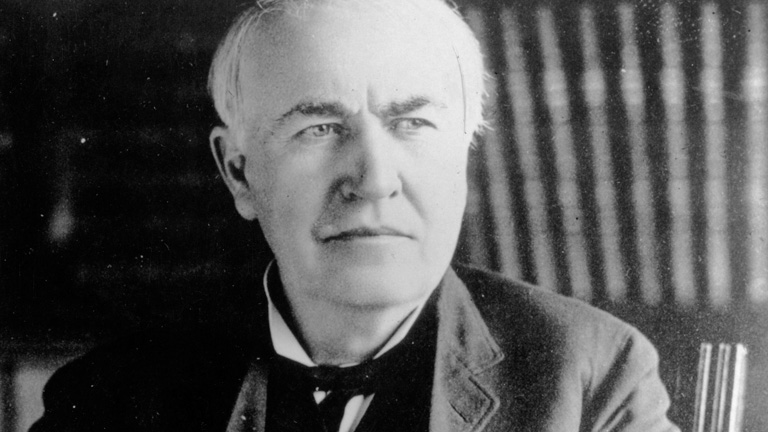
“Many of life's failures are people who did not realize how close they were to success when they gave up.” 

― Thomas A. Edison


“So comes snow after fire, and even dragons have their endings.” 

― J.R.R. Tolkien, The Hobbit


“Real courage is when you know you're licked before you begin, but you begin anyway and see it through no matter what.” 

― Harper Lee, To Kill a Mockingbird


Friday, 12 August 2016

5 Ways To Prevent Your Vehicle From Being Hacked


According to a BBC report, a large portion of the 100 million Volkswagen vehicles sold between 1997 and 2016 can be unlocked remotely by hackers. According to the article, a simple home made radio whose overall cost is about $60 is all a hacker needs to spy on key FOB signals and use them to clone digital keys that unlock vehicles. The problem: millions of vehicles using the same cryptographic key! The findings were reported in an academic paper out of the University of Birmingham, whose researchers made the following shocking claim:

"We were kind of shocked," Timo Kasper at Kasper & Oswald told the BBC. "Millions of keys using the same secrets - from a cryptography point of view, that's a catastrophe."

Volkswagen vehicles are not the only ones to be vulnerable to such a hack--any car that has a keyless entry is vulnerable. 

But there is another area of vulnerability, namely vehicles that rely on extensive computer systems. In one report, hackers were able to deactivate the breaks of a Jeep while it was in motion. With the rise of computer systems in cars comes the rise of security complexity and vulnerability. Will Knight of MIT Tech Review makes this observation: 

Unsurprisingly, carmakers have begun taking computer security a lot more seriously, but they have been blindsided by the speed of technological change within the industry, and especially by how the addition of connectivity has opened cars up to attack. At the same time, they are rapidly adding new functionality that will require extra security scrutiny.

So how do you protect our vehicle from being hacked? Here are a 5 tips:

1. Drive a simpler vehicle: Ironically, this suggestion comes from Fortune Magazine. With luxury vehicles like Tesla and BMW comes more computers and thus more vulnerabilities. In fairness, Tesla is one of the most sophisticated companies that rewards 'white hat hackers' for discovering vulnerabilities. 

2. Avoid expensive vehicles: This again comes from Fortune. An expensive vehicle obviously holds out a greater incentive for hackers. 

3. Don't use your keyless remote for entry: This is an easy fix. To lock your vehicle, simply use the central door lock button. It's fine to use the keyless entry to get back into your vehicle because you'll be driving away from the area in which your signals are being trolled. 

4. Use the original Club: Old world deterrent for the new world--the original Club 1000! Put it on your steering wheel, and motivate the hacker to move on to a more vulnerable vehicle. 

5. Keep your keys safe: It's easy for a thief to steal your vehicle when you're keys are sitting out in plain view at the cafe, or left in the vehicle itself. It's a simple counter-hack, but it's effective.

The more our vehicles become computerized, the more vulnerable they will be to hackers. While you still can, it might be best to forego the purchase of a modern computerized car and buy something more vintage. 

Wednesday, 10 August 2016

Build A Stronger Upper Body With These 4 Easy At-Home Exercises


With the 2016 Summer Olympics captivating people worldwide feats of incredible human strength, speed, and agility, it's easy to feel like a couch potato. 

In a recent article in Men's Health, a study has found that men are weaker today than they were 30 years ago. The way it was measured was in grip strength. Apparently, the strength of your grip determines the strength of your hands and upper extremities. 

To me, this isn't surprising news: with the rise of the Information Age the majority of us are working jobs that require very little physical activity, unlike the agricultural and factory jobs of the past. We sit, type, click a mouse, tap our phone and tablet screens, and go home. Not only are such sedentary jobs making us physically weaker, it's also posing a serious threat to our overall health. Many people rely on the gym to keep them somewhat in shape; but with our busy modern lives, and the overall cost of a gym, many either can't take the full advantage of it, or simply can't afford it.

So how can you improve your strength right where you are now? You're reading this article and want to get stronger--how do you do it? Here are some simple things you can begin doing in the comfort of your own home that are proven, with some dedication of course, to work:

1. Push-ups: This is a basic exercise that you can do anywhere. I know one person who did them in the washroom at work during his breaks. The key is to do them everyday. It doesn't matter when you do them, just do them. How many? Simple: as many as you can. The more you do them, the more you'll be able to do.


2. Crunches: This exercise will build your stomach muscles and core. It remains one of the most effective exercises, and, again, can be performed right at home. Do as many as you can, then try to do more. Work at them everyday, and you'll notice the results. Will it take inches off your tummy? Not unless you're watching your diet and burning off more calories than you're taking in. Will it strengthen your stomach? Yup. As well, by strengthening your stomach you're preventing back injury.


3. Bicep Curls: This is to build those Popeye arms--well let's not get too far ahead of ourselves; making them stronger will suffice. Don't have any 50LB dumbbells lying around? No problem. Get yourself a jug of milk or water or even a book and start curling. 


4. Chin-Up/Pull-Up: This is another basic exercise that's amazing for building upper body strength. You can purchase a chin-up bar that fits inside a door frame, or use some of the wood framing in your basement, or find a tree branch--whatever. Just do them. They build your arms, shoulders, and back.


I like these exercises: no expensive gym memberships, no waiting in line at the lat pulldown station or benchpress, no extra cost for a fitness guru to drive you to tears raining medicine balls down on your abdominals--just simple strength-building exercises that get the job done. Start a regimen today that includes doing 3 sets of each exercise--should take you no more than twenty minutes. You'll feel great, and build your strength.


Monday, 8 August 2016

6 Reasons Why You Need To Become A Morning Person


I used to be a night person. A night person is one who has a preference or habit for staying up late at night. It's not unusual for a night person to be found staring blankly at a television or computer screen at all hours of the early morning claiming an inability to sleep. Night people get energized when all others around them are turning in for the night. Night people typically wear this habit as a form of distinction or characterization--hence the name 'night person'. 

Nevertheless, I was a night person for many years--until I became a father, and realized that if I were to get anything done, it had to be in the morning. So I switched over to 'morning person' not unlike the day I decided to shift from a left-handed golfer to a right-handed one (long story...).  

I realized something very important about being a morning person: it has a different kind of rhythm, a different kind of head space. Whereas the evenings are more dreamy and abstract, mornings tend to be clearer and pragmatic. If you want to meander around in a dream-like state, stay awake late at night. If you need to get something done, get up early in the morning. 

With this said, here are reasons why you want to become a morning person:

1. Get a jump on the day: When I was a night owl, I was at times coerced (by ambition mostly) to have early morning meetings with prospective clients. The typical breakfast meeting was at 7am, which to me was just plain wrong. What I realized over time was these were the people out there making moves, cutting deals, getting leads, drumming up business. I saw that in some ways the world was given to the morning people. I feel the same now when I get up early--that I am getting a good jump-start on the day.

2. Mornings say productivity: I know there are many who can produce at night; but I've noticed that I can get more accomplished early in the morning. Again, evenings tend to be more abstract and dreamy--which is why people usually hit the bars and pubs at night, and coffee shops in the morning--and mornings more pragmatic. If you have something important to do, rise early and get it done before breakfast. The rest of the day is golden

3. First fruits: Money managers will always tell you that when you get paid to pay yourself first with a certain percentage. To me, this also applies to creative work or any kind of important task. When you get up early to work, you're putting your first fruits forward toward that special task. I always feel better when I've reached breakfast and have put 1-2 hours into my work or an important long-term project. 

4. Join the ranks of popular morning people: Winston Churchill, Oprah Winfrey, Jennifer Aniston, Steve Jobs, Charles Dickens, Tim Cook, and Ernest Hemingway--to name a few. 

5. Perhaps happier: In a study done in BMJ on night people (owls) and morning people (larks), the conclusion was that while night owls show slightly higher intelligence (whatever that means), they are more prone to substance abuse and getting into trouble. Conversely, morning people were more conscientious about time and other people, and more proactive. Hence, while the study showed night owls to have more money and access to cars, larks might in fact be happier. 

6. Possibly better for parents: If you have younger children, burning the midnight oil could lead to chronic lack of sleep. Falling asleep in front of the TV at 2am and being awakened at 6am by your 4 year-old can lead to serious health and productivity problems. Alternatively, falling asleep with a book in your hands at 11pm, rising at 5am to get work done, and greeting your child at 6am with warm breakfast offers a greater pay-off across the board.

If you're a night owl and are lacking productivity, consider switching over to mornings. While there are programs that help you transition, it took me a few days to adjust--I just one evening decided to turn the lights out at 11am and set my alarm to 5:30; and it's worked quite well for several years now. There are the odd times when I slip back into my old night owl habits, but I simply get back into my routine when I need to.  


Friday, 5 August 2016

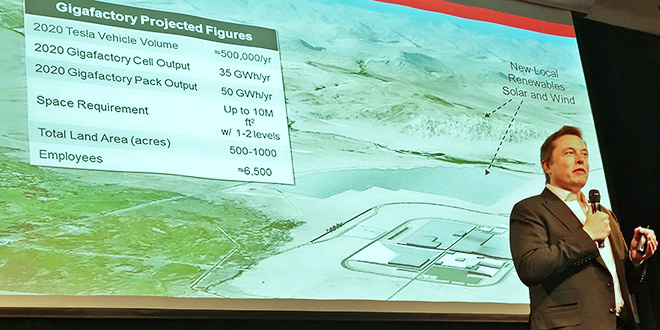
Tesla's Monstrous Gigafactory Should Make Humanity Unsettled, Not Hopeful


I'm continuously intrigued about Tesla and Elon Musk. I believe that Elon Musk is one of the most dynamic entrepreneurs, innovators, and inventors today--possibly one of the greatest of the 21st Century. Here's a guy who sold PayPal to eBay for a bountiful $1.5 Billion and instead of leaving the world for a career in hedonism, he used his profit to bankroll a personal vision for space travel and sustainable energy: the latter, saving the world from inefficient, expensive energy, and the former saving the world from nuclear war--or at least providing an exit strategy for earthlings. 

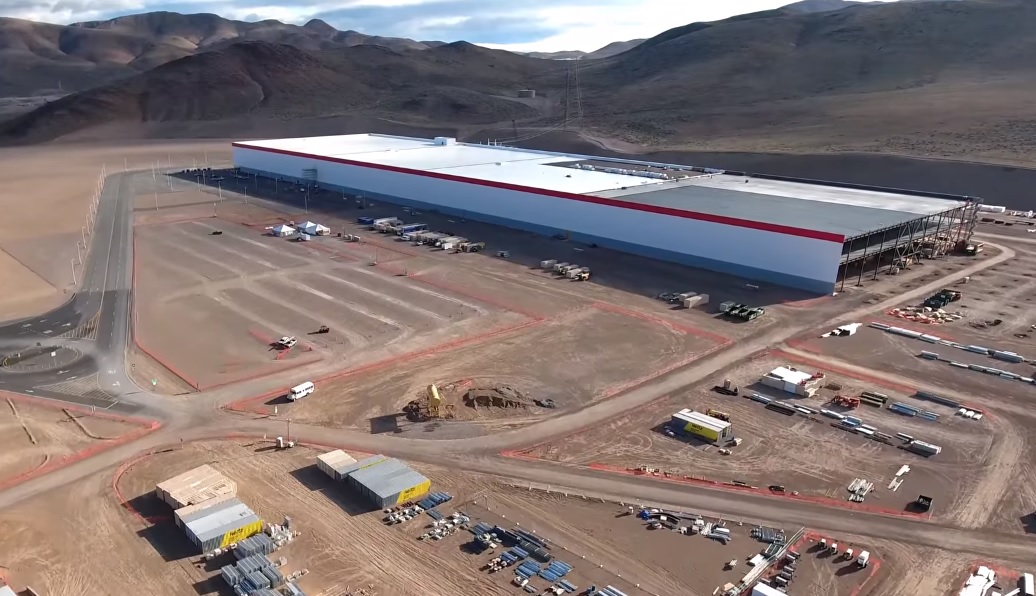
Gigafactory: thought your Costco was big?
But while Musk's vision may be humanistic on the surface, underneath one can't help but see a vanishing of human beings in  a way that seems disquieting, even creepy.

The late American inventor Buckminster Fuller called factory waste "misguided energy." This is the way great inventors think--they find ways to redirect waste to practical, revenue-generating ends. As I've reported in an earlier post, Musk's Master Plan includes a way for Tesla vehicles to form a fleet that transports people to their destination. But this isn't just any fleet; it's a fleet made up of vehicles that would otherwise be sitting stagnant in office parking lots across the continent--this is the redirection of waste; for instead of the potential of the vehicle being wasted in a parking lot, it can be put to use to transport people around the city. But that's not all: as part of the fleet, the vehicle would be generating revenue back to the owner, thus paying down the price of the vehicle itself. Moreover, the vehicles will be run on clean battery power, which will radically cut down on noxious vehicle exhaust (waste) that creates smog and other health problems. 

But there is a part of the waste-mitigation vision of Tesla that seems somewhat troubling, namely the redirection of human resources. One could argue that a fleet of driverless cars is a benefit to humanity by removing the need for human potential to be 'wasted' on operating a vehicle. Someone like Musk might argue that the human potential used in operating a vehicle could be better used to solve global problems or design new things. Nevertheless, transportation has been a reliable way for people to sustain a living for centuries. A vision that takes this form of work away from humans shows almost a disdain for them. 

In fact, there doesn't seem to be a human element to Tesla's vision at all--not just in the operation of the fleet, but even in the very manufacturing of the vehicles itself. 

Teslas's answer to Job's vision of a new Apple head office is the Gigafactory--the second largest building in the world. The Gigafactory will be the megaplex for the manufacturing of Tesla vehicles--Musk calls it "the machine that makes the machine." But for Musk, the Gigafactory production line will be operated solely by robots. Robots, according to Musk, are fast, clean, and efficient--humans simply aren't. If humans are used to manufacture the vehicles, then production will slow down to what he calls "people speed," and that's just not good. 


An inside look at the Gigafactory


One problem with this is while Musk is claiming to help humankind by creating these autonomous vehicles that will transport them everywhere, he's taking a lot of potential jobs out of their hands. Like transportation, manufacturing has been a solid form of employment for over a century; but for Musk, the end (speed, efficiency, performance) justifies the means. Think of how many people the Gigafactory could employ if humans were the operators of the manufacturing process. But that's just a minor problem for humanity--there lies an even greater one under the surface of an overall optimism about "the machine" itself.

Musk has been part of a group of top thinkers warning the world about highly advanced artificial intelligence. He believes that we will have killer robots in the next 5-10 years; and that the world isn't taking the rise of machines seriously enough. In fact, his SpaceX solution seems to have the potential of a robot war in mind. In spite of this area of foresight, Musk seems to be overlooking the potential of "the machine that powers the machine" becoming self-aware and driving (pardon the pun) a rogue agenda--the solution for human transportation actually becoming a big part of the problem that seeks to annihilate humankind itself. 

What stops a factory larger than 95 football fields and bursting at the seams with highly advanced robotic technology from advancing to consciousness? Seems far-fetched? Well so does heating up Mars by launching thermonuclear bombs into its poles--a solution Musk maintains is plausible. How is it that the Gigafactory is robotically benign when it's potential is lauded as so advanced? When you look at the exponential growth of technology, this scenario is more than merely plausible. 

And while Musk may be a humanitarian guy with visions of being the superhero, what if something happens to him and the Gigafactory suddenly succumbs to a villain despot who turns the technology against humankind itself? Implausible? No. 


Elon Musk might be a super villain...


Musk has to have these scenarios in mind, and most likely does--but he's holding his cards tightly. 

You think I'm overreacting? 

Want to know another name Musk recently called the Gigafactory?

"Alien dreadnought"--

No joke!

In Musk's own words, deftly quoted by the Washington Post, 

"It's like, what the hell is that?"


Wednesday, 3 August 2016

One Crazy Summer? Stay Hydrated With These Amazing Foods


Eating hot soup on a sweltering summer day? Yup. My wife cooks soup during the summer all the time--hot spicy soup. Yes, I get hot while eating it, but it's one of the best ways to re-hydrate when you've lost fluid out in the hot sun. As well, it is a great way to replace the salt you've lost while sweating. Broth-based soups are mostly made up of water, and contain sodium that replaces salt in your body. So while it may seem counter-intuitive, eating soup in the summertime is a good healthy thing to do. 

There are a number of great fruits and vegetables that will help you re-hydrate during these hot summer months. Here are a few of them:

1. Fruits: These fruits are made up of more than 90% water: Watermelon, cantaloupe, pears, pineapple, and grapefruit. If you're looking to choose the perfect watermelon, check out my article. Put these fruits in a big ol' fruit salad, and you'll be hydrating while eating something enjoyable. 

2. Vegetables: Leafy, green vegetables, such as lettuce, broccoli, and celery, have 90% or higher water content. Napa cabbage, summer squash, and celery have 96% water. Put these veggies in a broth-based soup, add some spice, and you're golden.

3. Coconut water: This is not to be confused with coconut milk. Coconut water is a great way to rehydrate. It's healthy, tasty, and rejuvenating. Will it hydrate more than a bottle of water? Probably not; but it's still a great beverage for summer.

The key here is to stay hydrated during these hot summer months. If you're feeling nauseous or experiencing migraines, it could be that you're dehydrated--it can happen so easily. If you're living without air conditioning in your house or apartment, you'll need to stay on top of your hydration. Make a good hot soup, and match it with a big fruit salad. If you're feeling tired or sluggish, coffee is another great hydrator, even though it's considered a diarrhetic. 

Monday, 1 August 2016

6 Big Dangers Of Playing Pokémon Go That You Need To Read And Understand


If you see people wandering around your neighbourhood holding their phones in front of them and staring blanking out into nowhere, they're not zombies--chances are they're just playing the new video-game rage, Pokémon Go. 

I remember the first time I witnessed this phenomenon at the park by my house--it was the strangest thing: here were grown men and women wandering around the same patch of grass, then leaving, only for the next cluster of people to arrive moments later. 

Last week, I was sitting on a park bench reading the news on my phone when a man stood beside me holding his phone to his nose. Being suspicious of anyone who saddles next to me, I looked up at him. 

"Playing Go too?" he asked. Mystery solved. 

"No," I replied, "just reading the news." 

"Oh, that's probably just as well," he said, "this game is pretty addictive--and it could even get you killed!"

"Really--" I was stunned. "How so?"

"Well," he began, "I read about one guy who was playing while in his car, and he drove into a train. Another was hit by a car while crossing the street. And another walked right off a cliff..."

Madness, I thought. 

The way the game works is the app uses the GPS in your phone. You wander around your neighbourhood looking to catch characters that show up on your screen--a way of the virtual and 'real' world to merge together into an experience.  

For those of you who are playing, or considering downloading the app and joining your friends, here are some dangers you'll need to avoid:

1. Car accidents: I mentioned it above, but it's a serious risk. If you're playing the game, don't drive--simple as that. A friend of mine was recently fined for talking hands-free on her cellphone while driving. Imagine what playing Pokémon Go will look like to a police officer. This is a serious offence, and something you should avoid at all costs.

2. Mugging: There are stories of people being robbed at gunpoint for their phones. When you're wandering through parks, completely engrossed by the little characters on your screen, you are oblivious to those around you. In short, you're a target! I don't know how you play the game while bring alert to those around you, but if you're wandering through a park with your $800 iPhone 6, maybe the game isn't for you. 

3. Predators: There was a story about boys in Missouri being lured into a park by criminals who had sent a beacon to a remote area using the coordinates in the game. As well, for those whose children are playing the game, it is a tool used by pedophiles to lure children to remote locations for assault and even abduction. 

4. Land Mines and other dangers: Yes--land mines. The government of Bosnia issued a warning to players of Pokémon Go that the game could inadvertently lead people to undetonated land mines left over from the 1992 Bosnian War. While land mines aren't an issue for people in North America, players are reporting walking into dangerous neighbourhoods, through spooky cemeteries at night, and lurid places of 'entertainment'. Apparently the game takes over one's attention, and people walk into walls, into oncoming cars, and even over cliffs. 

5. Sun exposure: Both the government of France and Israel issued warnings to Pokémon Go players about the risk of over-exposure to the sun while playing. If you're going out to play, be sure to wear a hat, and bring some sunscreen and a bottle of water. 

6. Big data leak: The game hooks into your phone, tracking your every step. This information is stored into the makers of the game's servers, and then sent to third parties everywhere. This is powerful information for Nintendo and its 'clients'; it's also very valuable for criminals. Imagine if this information were leaked. I know that many people don't consider privacy all that important, but it should be a concern that your steps are being tracked while you're playing a seemingly harmless 'game'. 

Pokémon Go is a global craze. It could be fun; it could get you and your friends outside enjoying your city and nature; it could bring you and your family closer together as you catch strange digital characters in the parks and neighbourhoods around you--but do take precautions, and play safe.