Friday, 7 October 2016

7 Things You Need To Do When You're Stuck In A Traffic Jam


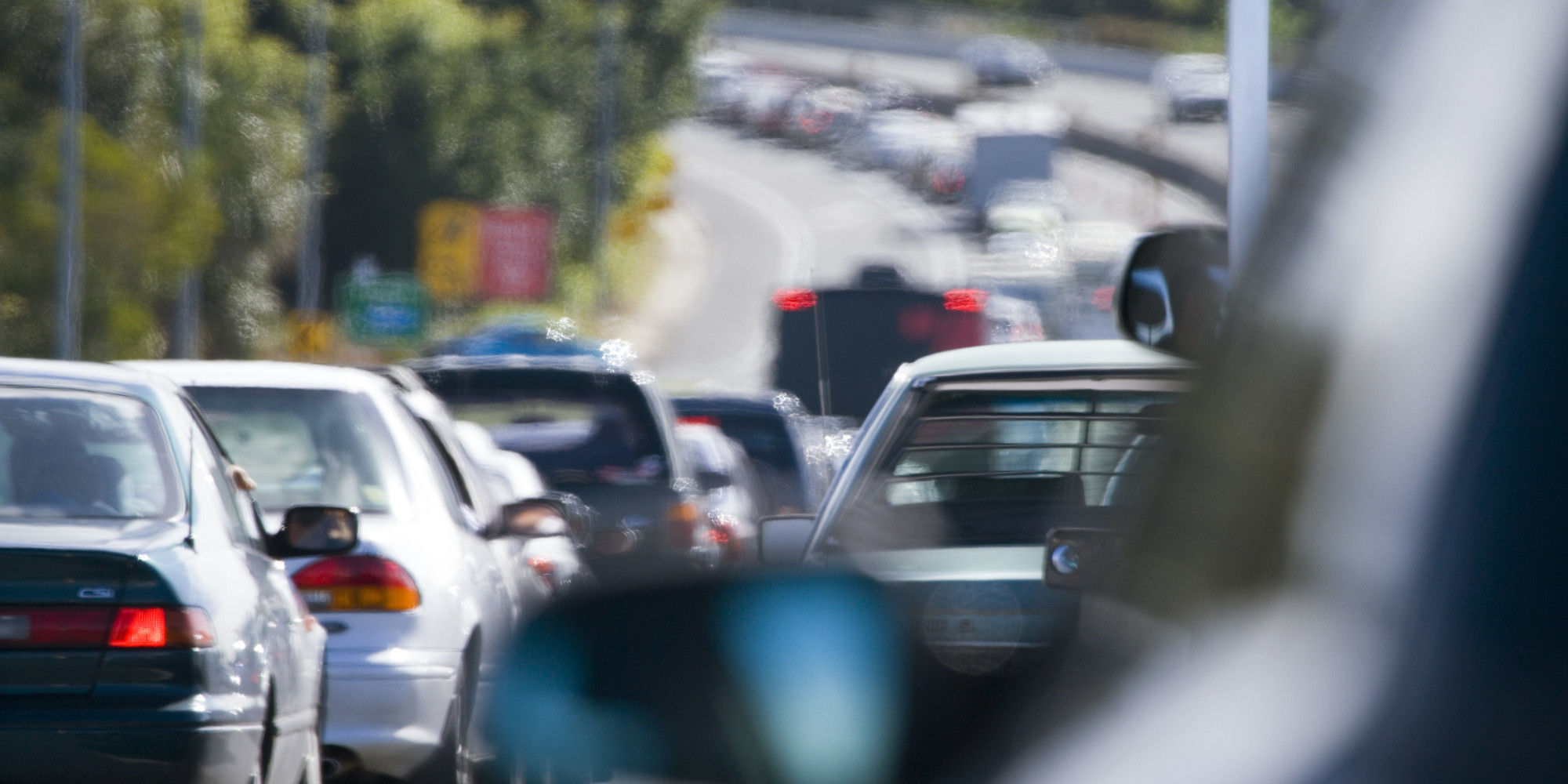
Toronto highways have turned into parking lots during rush hour. In fact, it can be terribly demoralizing to sit in your car for over an hour just to get home after a hard day at work. The 401 and QEW are parking lots, and all you can do is sit there, hang tough, and not fall asleep. 

Here are some tips for dealing with the rush hour parking lot:

1. Remove Distraction: Driving in heavy traffic is draining on the senses--you have to concentrate on a number of things that can quickly fry out your nervous system. The worst thing you can do is crank up the Rolling Stones, and start texting your friends. Instead, turn off your music--or if you insist on music, put on something more soothing, like classical--turn off your cell phone; and if you have passengers who are talking your ear off, kindly tell them to be quiet. You need to pay full attention to the road.

2. Stay Cool: If it's a warm day, keep the interior cool--it will help you stay alert. Rolling the windows down might be too noisy, so keep the air conditioner running on a cool temperature. 

3. Chew on Gum: Having gum or candy in the car is important when you need to focus. There's something about chewing gum or eating candy that stimulates your brain. 

4. Keep your Distance: It's easy to get edgy and tail-gate the car ahead of you; but this can be dangerous. The traffic on the highway during rush hour is highly unpredictable--all it takes is one person hitting his or her brakes and you can be in a major collision. Keep the 3 second rule between you and the car ahead of you. If you're in the left lane and the 3 second rule is driving people behind you crazy, move into a calmer lane. 

5. Look Far Ahead: If you can, direct your gaze about 5-10 vehicles ahead of you. When you see brake lights 5 cars ahead, you'll have more time to respond. 

6. Signal: It's easy to throw all caution to the wind and just jump in and out of lanes. But it's important that you communicate your intentions by using your signals. Communication on the road during heavy traffic is critical. 

7. Get off the Road: If you've broken the 2-hour mark, and you're at a standstill, you can just pull off the highway and take a break. Stop at a restaurant, Tim Hortons, or some other place and chill out. It's better to take even longer to get home than run the risk of accident, or meltdown.


Wednesday, 5 October 2016

6 Basic Ways To Prepare For A Hurricane Emergency


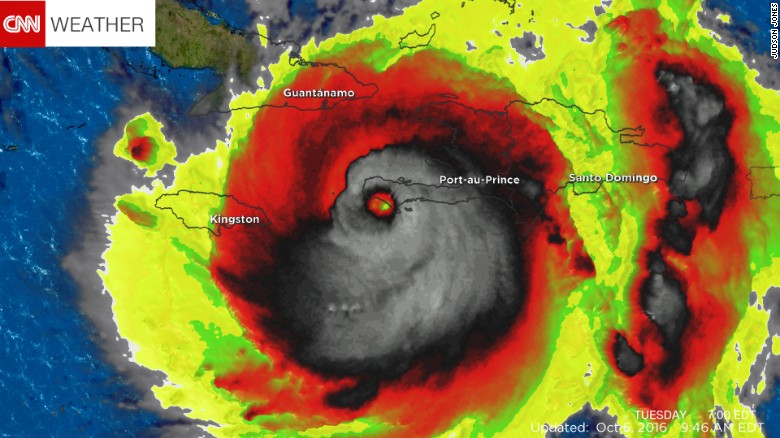
The skull face image of Hurricane Matthew is indeed menacing. It's amazing how many people in Florida and South Carolina are being evacuated--into the millions. Costco and Home Depot are flooded with people buying up the remaining bottles of water and chip board in last minute preparations before evacuation. The storm has already taken 11 lives in Haiti, and is now surging into the souther United States.

CNN Weather shows the skull face image of Hurricane Matthew.
But what do you do to prepare for a storm of this calibre? 

1. Know the evacuation route: Listen to your national weather station that will alert you to the evacuation routes. If you don't have a short-wave radio, it's best to have one beforehand. 

2. Put together a disaster supply kit: including a flashlight, batteries, cash, first aid supplies, and copies of your critical information if you need to evacuate.

3. Have adequate supplies on hand: When you look at photos of people hitting Costco for water and other last minute supplies, you can see the desperation. You don't want to be part of that. It's best to stock up when you can.

4. Remove debris: Loose branches from trees can cause serious damage. Before the storm, remove any dead or loose branches and limbs from trees.

5. Secure your home: Retrofitting to secure and reinforce your roof, windows, and doors will reduce property damage. This is what people are doing when you see images of them boarding up the windows and doors and roofs. It's an important part of securing your home.

6. Safe room: Remember the movie the Panic Room? Well, many people are building such rooms into their homes; and they can be a very good way to hunker down through a hurricane. 

These are basic preparations. If you're not in an evacuation area, don't feel too confident and start wandering around in your car--best to stay home. If you have a generator, you might need it. Turn your refrigerator and freezer to the highest temperature, and open only when necessary; that way, if you lose power your food will stay colder longer. Stay tuned to your local weather station for all updates. Charge your phone so you'll have a full battery in case the storm changes and you have to get out of dodge. 


Monday, 3 October 2016

Innovation All The Time With These 8 Awesome Tips


There's a greater need for innovative teams as competition among companies and marketshare is fierce, and more organizations are starting up innovation labs and departments of disruptive change. If you're a company owner, manager, or an employee climbing the ladder, you need to stay innovative. 

Here are 8 tips that will inspire greatness:

1. Fail: Think of Thomas Edison's famous statement: "I did not fail. I simply found 10,000 ways that didn't work." When you are afraid of failing, you're unable to try new solutions, or speak your mind about a way forward. Those who generate ideas aren't afraid of falling short--if one bombs, they'll just generate more.

2. Riff: It's like jazz: you're working with a team and riffing off your colleagues like Coltrane off of Miles Davis. Don't think of yourself as a lone ranger, but rather like a jazz musician: take people's ideas and riff off them. If you don't know how to do that, check out documentaries of famous jazz musicians like Miles Davis or Herbie Hancock.

3. Look for synthesis: Often people think of ideas as tiny atoms that are isolated. But when you take three people's ideas and sync them together, you possibly come up with something greater. People like synthesizers. If you're a manager, look for synthesis, especially if you have a team of people who love their own ideas and won't move forward unless their ideas are included in the plan. People want to contribute--that's why they love synthesizers.

4. Push the idea to its limit: You need to kick the tires on an idea to see if it'll survive disruption. To do this, come up with wacky scenarios--in our crazy world, there's no such thing anymore as wacky--and run your idea through them. See where the points of failure are, then redesign it.

5. Use divergence: What do mountain ranges and self-driving cars have in common? Or what about bats and mobile technology? Typically, we use the same kind of thinking for old ideas as we do with new ones. If you take two seemingly unrelated things and fuse them together, you'll get a totally different picture of your solution. Don't look all the time for similarities of things, but rather the links between unrelated things.

6. Lock down: Think of your meeting room as an incubator tank. Make it comfortable with food and plenty of caffeinated drinks, and magazines, and cool design books, and plants, and large whiteboards, and Lego toys, and anything else you and your team enjoys--then lock yourself in. Spend a week in that place. Take plenty of photos of your work. Stay there till something awesome emerges.

7. Get outside: Steve Jobs was a master of walking outside during meetings. It's important to get outside, clear your mind, and get your body moving. And did you know that walking provides oxygen to the brain? You're actually being smarter by walking around the block of your office building. 

8. Learn about creativity: There's a lot out there on creativity, from TED Talks to books to articles. If you're a manager, get your team to learn everything it can about creativity, then assign everyone to bring 5 new practices to the next meeting. Create new habits around what you've learned. 


Friday, 30 September 2016

Self-Driving Vehicles Will Become Legal Much Sooner Than You Think


There are many people who talk about self-driving, or autonomous, vehicles as if its something that will happen way out in the future. But the more I observe this phenomenon, the more I'm realizing that this technology will be ubiquitous much sooner than many currently claim or are willing to believe. 

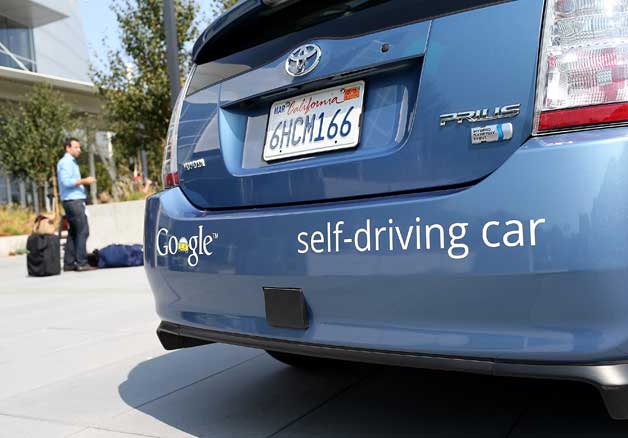
One area that we see opening up for self-driving vehicles is the law. In a September 30, 2016 article in the Mercury News, State of California Governor Jerry Brown has signed a bill that allows self-driving vehicles, without steering wheels, brake pedals, and accelerators, to be tested on public roads. A human back-up operator is not required, but the vehicle speed must not exceed 35m/h. And who is one party behind this push to get self-driving vehicles tested in a hurry? Yes--Google. In a previous blog post, I wrote about Google's lobbying of the US Government to implement laws that allow self-driving vehicles to be tested on public roads. RW Baird analyst Colin Sebastian made this claim in the Mercury News report,

“Any governmental body endorsing fully autonomous driving or testing of fully autonomous driving is a step in the direction that could be favorable for Google . . . . There’s a lot of debate around whether fully autonomous is the right step in the near term versus that more incremental approach."

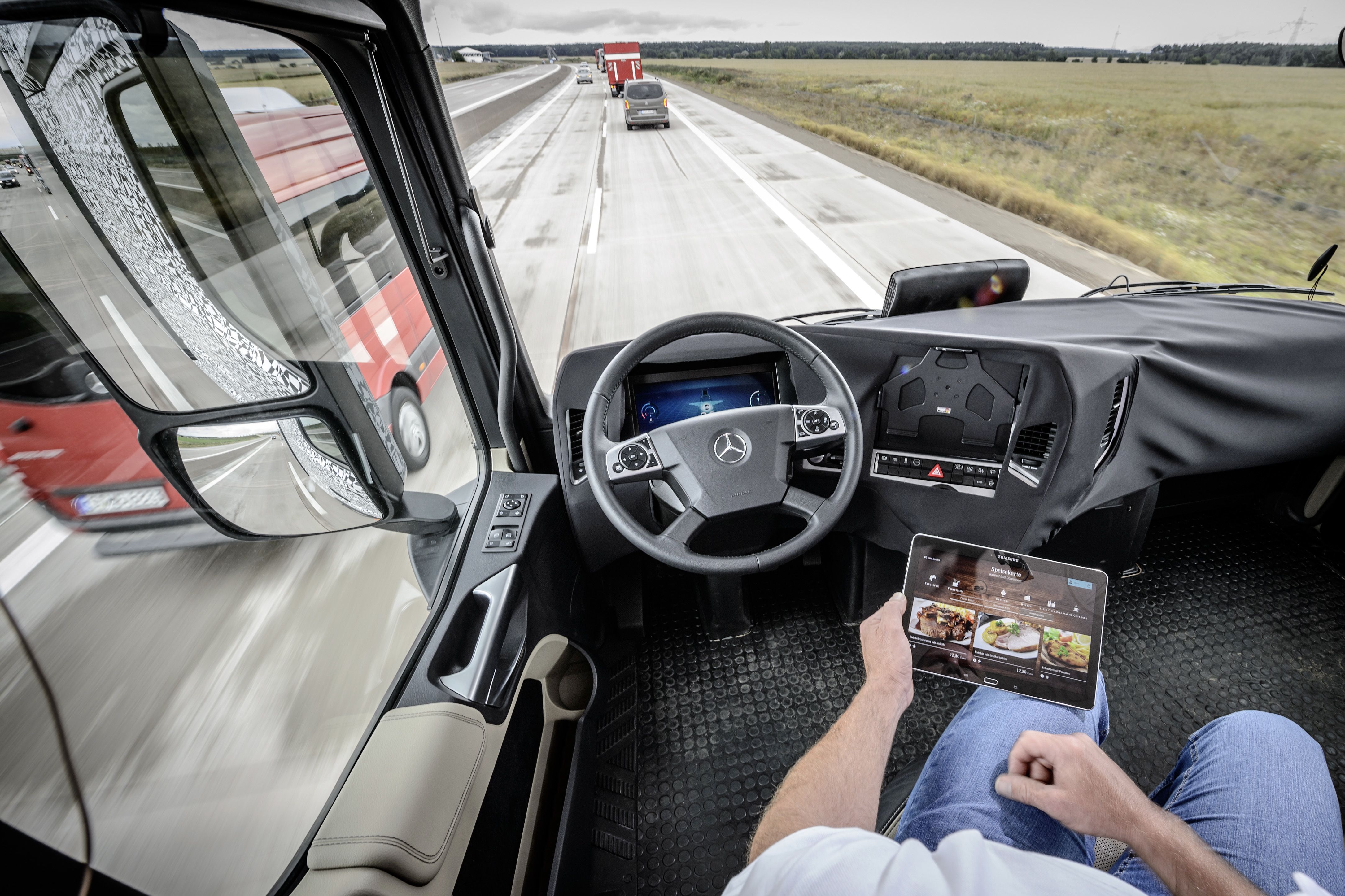
But Google's push isn't the only force behind the rapid rise of self-driving vehicles. In a recent article from the Washington Examiner, there is a growing trucker shortage throughout America, according to a report from the American Trucking Association. The report states that with the holiday season approaching, there is already a shortage of over 73,000 long-distance truckers--more than three times the shortage of 2005; and that number could rise to almost 200,000 within the next 8 years. This driver shortage is hitting every industry, not just FedEx and UPS. The report states that the shortage is  a result of retirements, low wages, a desire of truckers to stay closer to home and thus avoid long trips, and a real shortage of talent with solid driving records. Given this shortage that threatens to double over the next 8 years, the American Trucking Association is calling for autonomous trucks as a solution to the shortage. The article states the following: 

"Autonomous commercial trucks could eventually have a positive impact on the driver shortage," said a report from the group. "Eventually, one could envision an environment when the longer, line-haul portion of truck freight movements are completed by autonomous trucks and local pick-up and delivery routes are completed by drivers."

So not only do we have Google--one of the most powerful companies in the world--lobbying for the lifting of laws that currently ban the testing of these vehicles across the US, but we also have the American Trucking Association calling for autonomous trucks as a significant solution for the challenges of a massive driver shortage. 

To me, these are signs that autonomous vehicles will be here before we know it--most likely within the next 3-5 years. That is a massive transportation revolution that will impact everything from roads to transportation to jobs. If you're in the transportation industry, you need to seriously take a look at this phenomenon. You need to realize that your job will be impacted in the next several years. These are very serious warning signs. It might not seem like it, but the transportation industry is in the midst of massive change. 

Wednesday, 28 September 2016

6 Ways A Daily Routine Will Lead To Greater Creativity And Innovation


I sat in an international forum on creativity once. There were a lot of people, and a panel of highly creative individuals, and they were all playing a game: who had the best creative idea. Each of the people in the panel was given 2 minutes to share his or her idea, and the rest of the 100+ attendants voted on how good the idea was. 

There was one idea that I recall that recently made me think. It was given, and this is going back 10 years ago, by the CEO of a famous design firm. Her idea was that one should eat one's eggs in a different way each morning, the point being that for creativity to flow, one has to do things, indeed even eating eggs, differently. At the time it sounded rational; but now I wonder . . . 

One key thing we notice when we peak into the lives of artists, thinkers, writers, or inventors can be summed up in one word: routine. Creative people live highly routinized, at times very boring, lives. They often do the same thing every day for decades; and what they're working on, creating, inventing, is carefully set within that structure--yes, even when it comes to eating eggs, or drinking coffee (right down to precisely how many cups, the number of beans used--in Beethoven's case--and served at the precise time each day). 

So while I resonated at the time with the 'do things differently' prescription by the famous designer, having a strict routine seems more conventional among creatives--except when it comes to their work. 

It's one thing to have a routine, it's another thing to approach your work in a state of safety, business-as-usual, and with a desire to keep the boundaries of your ideas neat and tidy. Whether it's Beethoven, Picasso, or Albert Einstein, these people pushed everything they had when it was time to create. Their lives were routinized to free up mental space and energy to put it to use where it was mostly needed: their creation. 

So, whether you're a middle manager with a plate full of projects demanding innovation, a writer biting your nails over the start of your next manuscript, an artist staring blankly at a canvas, an entrepreneur lying sleeplessly in bed with ideas banging around the cerebral cortex, you need to get a routine going in your life.  Here are some tips:

1. Do the same thing everyday: Many of us already do this: we wake up at the same time, get ready for work, drive to work, etc. What makes creative folk different is that the routine is there to get them into autopilot and in the right creative space to work. Your routine shouldn't be drudgery, it should be solidly in place for the purpose of creating. 

2. Set a specific time in the day to create: This is where the routine can swallow up the creativity. How many times do you hear people say they would love to write that novel or work on that business plan or design that new idea BUT life is too busy? That's bunk. In fact, that's resistance. If you want to create something, you've got to treat it like your meals and make them part of your routine--every day. 

3. Make your creative time the best time: When do you create best? First thing in the morning? Late at night? Mid-day? Whatever it is, set that time aside and do nothing else but create whatever you need to create. If you're that middle manager, that's the time everyday to get the team together; and if the team can't make the meeting, just have one with yourself. Don't break the momentum--do it every day. 

4. Push the limits of your thinking and working: Did you see Elon Musk's address on how to make humanity a multi-planetary species? Here's a guy not only talking about it, but also doing it! When he goes into work, he's pushing the boundaries of his ideas--and there's no reason why you can't do it too. The problem is you see too many limits, or maybe just tell yourself your ideas are crazy and will never work at your company. You can't worry about that. You've got to push your ideas every time you sit down to create. That's a difference that makes a difference between those who create awesome stuff, and those who don't. 

5. Live your waking and sleeping hours for that creative time: Carry a notebook and pen around during the day, and have it sitting on your bedside table when you're sleeping. You never know when an idea will pop. When it hits, write it down and try to incorporate it in your next creative session. This is normal: your best ideas will come when you've walked away from your creative time and you're standing waiting for the subway, or stuck in traffic, or walking down the frozen-food section of the grocery store. When the idea hits, write it down.

6. Be ready for nothing to happen: When you have your day routinized, bring your full attention, full capacity, full potential to that creative moment--and be ready for it to flop. Sometimes the ideas won't be there; sometimes you'll be recycling old ones; sometimes you'll stare at the page or whiteboard or canvas and nothing will come. You can always start with a line or a stroke or a sentence or a graphic image and see where it takes you. Don't expect the ideas to pop every time--but do expect yourself to create at the same time every day. Expect of and demand yourself to create at the same time every day. You'll see the difference. 


Monday, 26 September 2016

Elon Musk Believes He Will Transform Humanity Into A Multi-Planetary Species


Elon Musk is the new face of entrepreneur. Steve Jobs was brilliant--no doubt!--but Musk is something other. Steve Jobs at one point was running both Apple Computers and Pixar, driving back and forth between the companies several times per week. Musk has two companies he works at as well as a non-profit. Both companies are pushing the boundaries of innovation in transportation--one ground, one space--and the non-profit, super-hero style, fighting the good fight against the threat of killer robots. 

This week, Elon Musk is going to launch a new technology that will bring Mars that much closer to Earth--or Earth-lings that much closer to becoming Martian. The title of the presentation says it all: Making Humans A Multi-Planetary Species

This says it all. He's not selling a product. He's not tarting-up another incremental improvement to an old operating system (sorry Apple!)--no. He's laying out a vision for the future and humanity; he's doing some more major vision-casting, and he's announcing it to the world. 

We all ask, what more can be done? And then Musk delivers something else. We all ask ourselves, what is possible? And then Musk paints a completely different picture of what 'possible' could mean. We ask ourselves if there are any real big thinkers these days--people like Einstein and Nicola Tesla, and Thomas Edison, and Alexander Graham Bell. There is: his name is Elon Musk. 


The Raptor Test.


I don't know what Musk is going to say tomorrow. Musk has already announced the release of the SpaceX Raptor: a rocket engine that will launch a rocket directly to Mars. The lack of rocket innovation has been a hindrance to Mars travel, and has led inventors and rocket scientists to talk about space elevators as the only way. But not for Musk--he makes the impossible seem easy. He claims that with the Raptor engine, rockets will be launched directly to Mars as part of the interplanetary transport system that will thus turn humanity into a multi-planetary species.

Think about this--it's amazing. How many entrepreneurs do you know who think this big, and have the brains and money to pull it off? 

We are watching the emergence of a new interplanetary civilization before our eyes. It's emerging--rapidly. It's Musk. And with Musk, others are trying to drag along by the hem of his cape. It won't be long. Technology feeds on itself and grows exponentially--especially when people are really pushing for solutions. With Musk and his teams, we could see a couple of major exponential leaps to space travel over the coming months and years. According to Space.com,

The company plans to launch an uncrewed mission to the Red Planet in 2018 using SpaceX's Dragon capsule and Falcon Heavy rocket, then follow that up with additional missions every 26 months for the foreseeable future, claims Elon Musk.

This is amazing. As one who reads and follows technology and the development of technology, I remain continuously floored by Musk. Indeed, I doubt we've seen anything like him and his companies in the past fifty to a hundred years. Like Tiger Woods, we ask 'How much more can this guy do?' But I doubt, unlike Woods, he'll disappoint. 


Elon Musk A Super Hero Or Super Villain?


I am a skeptic. I don't just buy anything. And as I'm writing I am asking myself if I've gone off the deep end, or if Musk has gone off the deep end, or both of us. Needless to say, we are witnessing a profound revolution of technology that will impact interplanetary travel like we've never seen before, and Musk seems to be at the forefront. 

While some CEOs are worried about making incremental improvements to someone else's technology, Musk is taking on the world with leaps and bounds. And as he makes leaps and bounds, he promises to take humanity with him. 

But will they follow? . . .


Friday, 23 September 2016

The Biohacking Revolution Goes Mainstream--Won't Be Long Now . . .


Tag implants have gone mainstream. Once the object of Grinders--a term that refers to biohackers, transhumanists, and techno-progressives--tag implants are now finding their way into mainstream media coverage.

A recent article in the Wall Street Journal entitled When Information Storage Gets Under Your Skin states that there are approximately 50,000 people in the world--indeed a growing number--with skin implant RFID tags. It also mentions the body hacker movement--a movement that's been featured in publications considered fringe--not the pinstriped button-downed WSJ.

Indeed the uses are myriad: storing personal data, storing phone numbers and contacts, being able to make phone calls, open doors, waltz through airline security.

But there are also serious ethical and security issues. What if you're hacked? Surely just because you have an implant doesn't make you immune to being hacked. There is also the issue of people with cognitive impairments, such as Alzheimers, having their important personal data stored on their body, but without their ability to consent to the process in the first place.

What I find very interesting is that biohacking, transhumanism, and other post-human movements are now going mainstream. Once a sci-fi fetish, it is now gaining notoriety and acceptance from conventional media. That means more people will be adopting the technology, which will indeed lead to an emergence of biohackers and transhumanists.

But this is where it's all going anyway right? As if the ability to text and tweet and buy concert tickets and open doors and store all kinds of data would remain on a 'device' external to the body. It's about the external becoming internal; about tools becoming appendages; it's about modifying the human body to become requisite with the demands of technology. And WSJ's coverage of biohacking is one important step on the way to the fringe becoming conventional.

It won't take long. Give us five years and the number of biohackers worldwide will grow by an order of magnitude.

Wednesday, 21 September 2016

Do We Really Want The Third Transportation Revolution?


Lyft is a peer to peer driving company that is to Uber what Apple used to be to Microsoft--it's all about community and an informal service compared to Uber's brand as more business like and 'professional'. 

Lyft's Co-Founder, John Zimmer, has gone on record to claim that within 5 years a majority of its vehicles will be self-driving. He went on to claim, according to Associated Press (AP) that "personal car ownership will come to an end because autonomous rides will become a cheaper way to travel than owning an automobile." His forecast is that by 2025, there will be no personal ownership of automobiles--2025. Zimmer calls this the "Third Transportation Revolution," in which he envisages people purchasing vehicles with milage limits on them, like mobile phones--but doesn't that sound like a lease agreement today? Well, it's a bit more like Netflix than leasing that Toyota. As self-driving cars 'evolve' into fleets, the model for transportation will be more likened to a subscription with a number of different options. Here's Zimmer from his paper The Third Transportation Revolution:

This service will be more flexible than owning a car, giving you access to all the transportation you need. Don’t drive very often? Use a pay-as-you-go plan for a few cents every mile you ride. Take a road trip every weekend? Buy the unlimited mileage plan. Going out every Saturday? Get the premium package with upgraded vehicles. The point is, you won’t be stuck with one car and limited options. Through a fleet of autonomous cars, you’ll have better transportation choices than ever before with a plan that works for you.

Indeed, Zimmer's vision is very similar philosophically to Uber CEO Travis Kalanick's: There are too many cars that are sitting idle in our urban spaces taking up precious landscape that could be used for parks. By shifting to a fleet of self-driving vehicles, we'll have fewer cars on the roads, fewer roads in our environment, and more parks to enjoy. These business models are all promoted under the guise of a call back to nature. Instead of individual cars, you'll have fleets of Lyft or Uber or Tesla or Apple or Mercedes or Google or whatever else vehicles. 

To me it sounds like more of the same. I've written before about CEOs becoming social planners and social engineers--and John Zimmer is another example. One question to ask is to what extent fleets of self-driving vehicles will indeed reduce the number of vehicles on the roads. If all these companies are in competition with one another, and we continue to have exploding population growth, will these highly competitive disruptive rogue-agent CEOs suddenly choose to lose marketshare and revenue and shareholder interest out of a trumped up love for the earth? I don't think so. 

The only thing these models seem to hold out for the public is less freedom of mobility and ownership. Is it somehow morally wrong to own a vehicle? And to what extent is the CEO of a for-profit company in any position to foist his or her morality on you? This kind of sales job simply creates the problem, then provides the solution--not unlike deodorant.

And who will control mobility in this Uber-Lyft revolution? Whose interests will mobility serve? Yes, of course you pay money to own and operate a vechicle--but you have a choice to go where you want when you want at any time you want. Your money buys you freedom. What happens if you need to get out of dodge in the face of a catastrophe? What happens if the Uber-Lyft revolution has all its vehicles on some kind of emergency function that shuts them down or has them transported automatically to some place you don't want to go? Sounds fantastical? Perhaps. But these scenarios are plausible, especially when human mobility is controlled. As well, I get skittish whenever someone tells me what I can and can't own--as if owning DVDs and Record Players and automobiles is a bad thing. What next, home ownership? 

What is really driving John Zimmer's report is Uber's Kalanick and Tesla's Elon Musk and the Google transformation agents, and the whole group of tech-giants all competing for market share and control over the next transportation revolution. It's profit--not nature--driven. To me, if Zimmer were really so concerned about getting rid of automobiles, then he would be doing something else, like using a horse-drawn wagon to harvest crop on an acreage somewhere. 


Monday, 19 September 2016

4 Ways You Will Become Superhuman--Unless Of Course You Don't Want To


There is a growing desire among people to transcend the limits of being human. People want to be rid of pain; people want to defeat death; people want to wield extraordinary intellectual power; people want their bodies to rival those of gods in ancient mythology; people want to become super-human. 

There are thought leaders such as Bill Gates, Ray Kurzweil, and Elon Musk who claim that with the rise of artificial intelligence--the raw power of computer intelligence that's set to grow at an exponential rate--the only way for humans to survive is to technologically enhance their biology. According to Fortune Magazine, the artificial intelligence industry--buoyed up by top CEOs like Jeff Bezos and Alphabet's Sundar Pichai--is set to become at least a $70 Billion industry in just 4 years. A huge spike from a merger $8 Billion only 3 years ago!


Elon Musk on his concerns about AI 

Some wonder if there's enough time for humans to enhance themselves before the next wave of AI enslaves us, wipes us out--or both. The main thing is intelligence; for if a robot can think faster and in a more complex manner than you can, how will you prevent yourself from becoming a slave? 

In the book "Our Final Invention" James Barrat argues that we are creating the engines of our destruction. Put simply, the AI project's objective is to create machines that have human consciousness. If this is the case, Barrat argues, they will have a self-preservation mechanism--part of their consciousness will be to ensure their own survival. Therefore, once conscious AI see humans as a threat--as having the power to press the shut-off switch--they will do all they can to thwart us, if not destroy us. Barrat claims that indeed we're too late to stop it; the engines of creation will not be stopped. And with that being the case, we must either enhance ourselves or perish.

But what kinds of things need to happen for one to become a superhuman? 

1. Brain enhancement: Whether by prothesis or a chip implant, technologists have been working on this kind of technology for a long time. The key to chipping up your brain is to plug into the internet's vastly growing knowledge ecology that will enhance your ability to think, make decisions, and access knowledge. Brain implant surgeries have already been achieved, and patients are learning how to work with a computer as it makes decisions for them. As the computers become faster and more powerful, the enhanced human brain will become in turn faster and more powerful.

2. Body enhancement: Again prosthetics is key here--think bionic man in the 21st Century. Humans are enhancing their bodies all the time through drugs and advanced physical training regimens. But as these technologies improve, humans will be able to alter their bodies in outstanding ways. Indeed, human bodies wear out. According to Ray Kurzweil, with nanotechnology, humans will be able to have 'nano-skin'--skin made out of tiny robots that will regenerate it, heal it, and change its look and feel. Want to be someone else for a period of time? Just reprogram the nanoparticles. 


Ray Kurzweil on bringing back the dead--no seriously.


3. Immortality: Aubrey de Grey is one of the pioneers of immortology--yes, the study of living forever. He believes we need to defeat the notion that death is an immutable characteristic of human existence. He is thus waging a techno-war against death and dying. According to de Grey, Kurzweil and others, with the advancement of medical technologies, and the exponential growth of technology in general, humans will be able to ride the longevity wave for the next thousands of years. Some are claiming that this generation of children will live into up to 300-500 years. De Grey's argument is simple: If wellness technologies can increase your life-span by 10 years, you have been given 10 more years of technological development; and within those 10 years, wellness technologies will give you an additional 25-50 years; and within that 25-50 years, wellness technologies will be able to buy you another 100 years; and within that 100 years, wellness technologies will be able to buy you another 1000 years--and so on and so forth. A significant area of medical practice for this is gene therapy. As genetic technology grows, so does the ability for doctors to eliminate the kinds of genes that cause cancer, heart attack, stroke, alzheimers, etc. 

4. Virtual Reality: This is another area that technologists are looking to for enhanced human experience: to live on the internet; to have oneself connected to the internet through brain implant technology. Already, virtual reality is being designed with a high level of verisimilitude to human experience--and it will only advance. According to Ray Kurzweil, humans will be living, working, playing, and travelling in virtual environments. Moreover, this will be a way he sees the ability of bringing people back from the dead, namely by reconstructing humans based on information left behind after their death, and recreating their bodies and brains. Once we are able to fully reverse-engineer and re-create the human brain, we'll be able to bring our dead loved ones back to life by recreating them as avatars.  

Does this sound crazy to you? How do you feel about enhancing your body? Do you see AI as such a threat that you would hands-down adopt the technologies, albeit loosely, explained above? 

What are the threats to human existence that these technologies pose? Some maintain that when we enhance our brains to such an extent, we'll be running so much information through them we'll inflict further harm on our minds and bodies. We're already the most medicated society in human history, largely due to the demands technology is imposing on our limited bodies. "Humans are slow," claimed the interviewer in the clip above with Elon Musk--humans are slow. Another scenario could be that your brain will become easily hackable, not unlike your mobile phone or automobile. 

And with Kurzweil's plan to bring his father back to life, it sounds from the clip that his father will indeed be a diminished copy of the real thing. What will that look like? Those with sci-fi imaginations should be going wild right now. 

That's the problem--it's all so speculative. We're playing with a kind of power the limits of which we don't know; and we're playing with our bodies and minds and future generations not unlike lab mice in a science lab. This should concern us. 

But what's the alternative if indeed AI is about to emerge the way experts are predicting? 

Time will tell . . . 


Friday, 16 September 2016

We Are Creating A Generation Of X-Men And It Should Concern Us All


Radical Evolution: The Promise and Peril of Enhancing Our Minds and Our Bodies--and What it Means to be Human was a huge book for me. I still remember where I was when I read it in one sitting, unable to put it down. In this non-fiction book that read too much like fiction, the author Joel Garreau laid out the GRIN technologies (Genetics, Robotics, Information, and Nano) in a simple way, then projected them out 30 years to show the promises and perils. Reading about human genes fused with bird genes to create X-Men characters seemed completely far out--this was the year 2006. I remember telling people about this book and about the strange things I had read, and their looks of concern for my mental health. 

Now, a short time later, my imagination was struck by an article in the Daily Mail with the headline: 

A powerful generation of 'X-Men' SUPERHUMANS will be here in less than 100 years, claims expert. 

The expert is Michael Bess, author of Our Grandchildren Redesigned: Life in the Bioengineered Society of the Near Future. In this book, Bess argues that under the guise of healing the sick and extending life and defeating death, human beings are being given the tools to completely redesign themselves. And this, as with Garreau mentioned above, will lead to a promise vs. peril reality. For instance, humans in this future of a few decades will be able to fine-tune their moods, communicate anywhere in the world in 3D, and have myriad relationships with artificial intelligence; however, those who have the money to enhance their bodies and brains will be given an immeasurable advantage over those who don't, thus creating an insurmountable gap between rich and poor, unless enhancement comes with equal opportunity. 

The enhancement technologies Bess lays out are pharmaceuticals, prosthetics, and genetics. But we are already using these technologies: we are using pharmaceutical already to enhance our moods and brain function; and some are wondering already if such enhancement is fair or simply cheating

Through prosthesis, implants, and other bioelectric devices, we are enhancing ourselves physically, as well as increasing our abilities to communicate with robots, computers, and the internet. Look at the biohacker movement--people who are hacking their bodies through chip implants--and you'll see this world of superhumans emerging. 

And through genetics we are not only understanding disease prevention, but also enhancing human potential through engineering. These are early stages of development, but they will expand rapidly over time. What will cause this great expansion of human potential through technology is exponential growth: that technology builds on itself by using the latest breakthrough to create the next one. Hence, technology doesn't extent incrementally but exponentially--in explosive waves that are often untraceable. 

I agree with Michael Bess: these expansions of human potential will happen within the next few decades. We are indeed at a tipping point of what it means to be human. And there are many people, some I've written about in this blog, who have the money and the smarts and the gall to create the next superhuman race. Indeed, with modern technology humans would already look superhuman to the people of the past. When the Spanish Conquistadors under Pizzaro entered the Incan Empire, the Incan's thought they were gods riding on strange animals and bearing flashing weapons. Imagine what humans of today would appear to a Spanish Conquistador. 

Bess's concern is a salient one: that we are literally redesigning the next generation of humans. And yet, Bess claims, this redesign could be important to try to become requisite with the rise of artificial intelligence. And this isn't only the concern of Bess, but others such as Bill Gates, Bill Joy, and even Elon Musk. Those who have the ability to see into the future can see the writing on the wall: unless humans enhance, the race itself will be in peril to the technologies it is creating--

an ominous irony isn't it?